
How a Tea Leaf is Made Into Six Types of Tea
And how tea processing also predicts the best temperature to brew your tea.

Looking intently at the color and tasting the stark difference between the green and black tea, you wouldn’t believe that they could come from the same plant. Surprisingly, all tea can be created from the same picked leaf: a tea leaf from Darjeeling in India can be made into a green tea, and likewise, a tea leaf in Shizuoka, Japan, could be turned into a black tea. Nothing about the picked leaf determines its tea type — the difference lies solely in processing.
How could this be? Well, it’s not only green and black tea, but rather all of these six types of tea: white, yellow, green, oolong, black, and dark tea, are made from the same kind of plant, called Camellia sinesis.1 Any other infusion of a different plant that we colloquially call a tea is technically called a tisane, but rather than feeling restricted by this categorization, I think it elicits wonder about how tea could be so simple, yet so diverse in flavor and aroma.
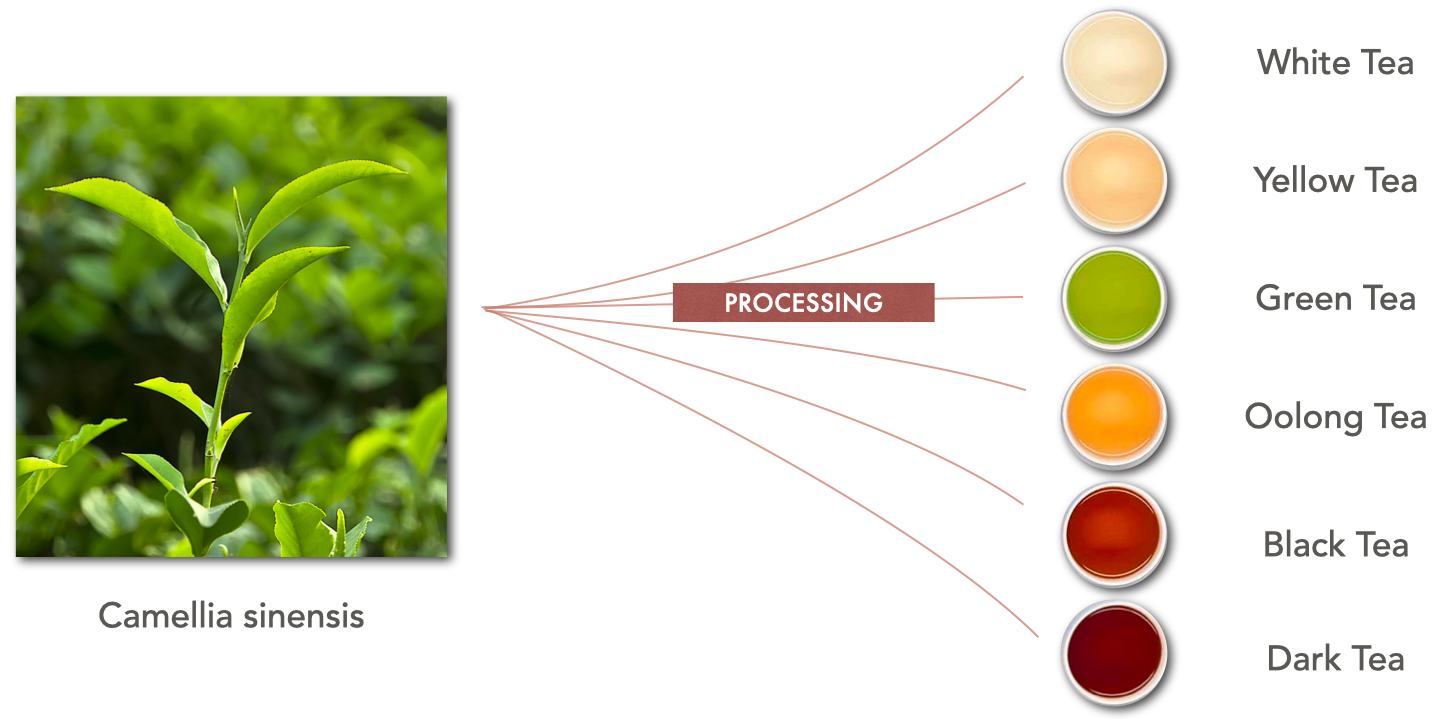
To me, tea is a perfect place to begin to understand extraction and taste, because there are so few variables to play with, in stark comparison to espresso or pour-over coffee, which has a new YouTube video every week with a new method of how to tweak your recipe. This post will teach you the basics of the chemical composition of the tea and how oxidation alters this composition to get the six tea types. At the conclusion of this, you will learn why a less oxidized tea, like green tea, is best brewed with cooler water to not be bitter, and that pu-erh can withstand boiling water and still taste sweet and balanced. You’ll be able to apply the knowledge and explain to your friends and family why they should take a teabag out of their mug after it’s finished brewing!
Tea Processing
What’s inside a tea leaf?
If we were to probe at the average composition of a tea leaf, we’d get the following table (sorted by percentage).2
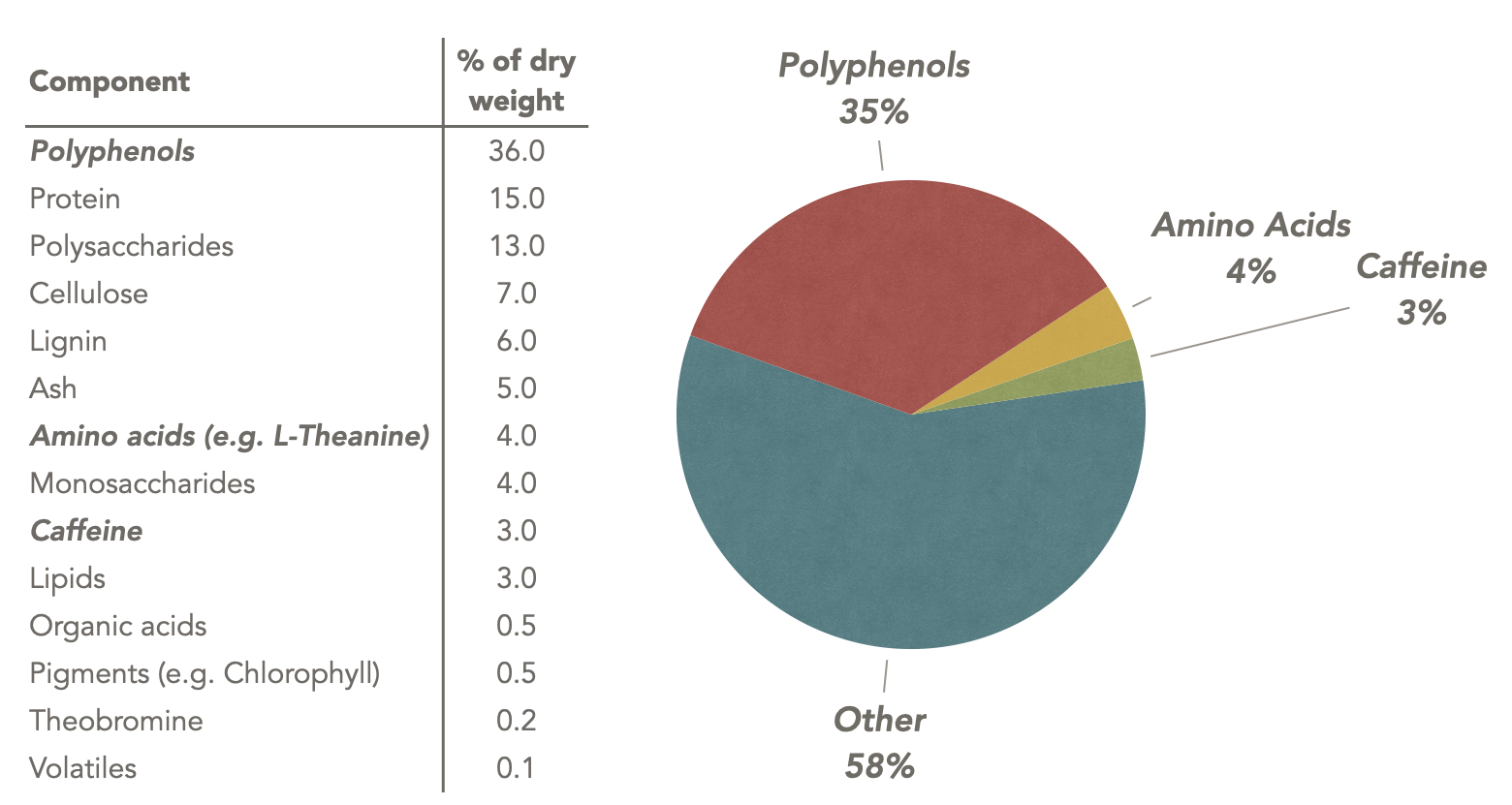
The first thing you notice is that a tea plant is composed of over 36% by antioxidants called polyphenols, but in tea, the polyphenol of interest is called a catechin. These are bitter and astringent-tasting molecules that are found in other foods like dark chocolate, berries, and nuts. Then come carbs, protein, and then small percentages of all of these miscellaneous compounds. Some special compounds of note are the lovely caffeine, which is bitter and gives that stimulation we desire, and L-Theanine, which is a very unique compound to tea that tastes sweet and umami, but also acts as a relaxant. Many tea drinks laud tea for the relaxed caffeine high that it imparts, due to the combination of these two compounds.
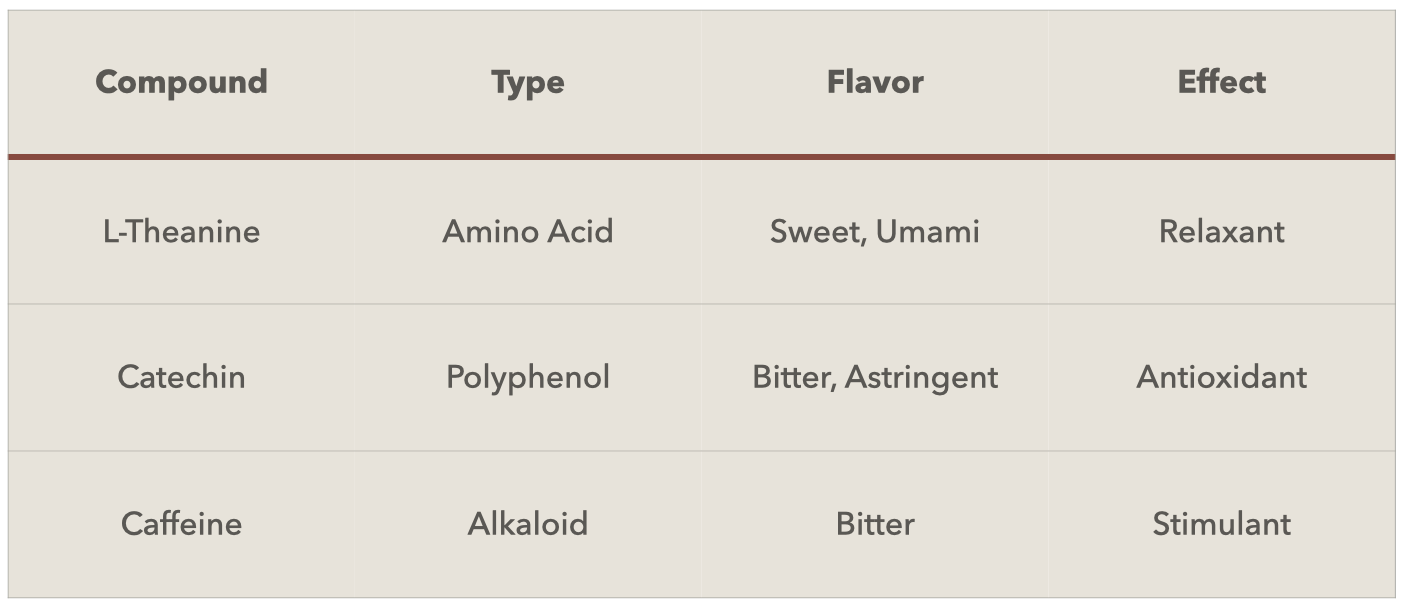
However, we can see from the pie chart that the most abundant molecule in a tea leaf is catechin, which, if eaten straight, would be extremely bitter, contrary to a good cup of tea. But, tea isn’t made from freshly picked leaves, and a cup of well-brewed tea isn’t extremely bitter, so how does it all square up? We’ll learn next how tea processing methods will use varying levels of oxidation to transform these bitter catechins into less bitter compounds, changing the tea profile from bitter to balanced.
A tea leaf browns like an apple, with oxidation
When we cut an apple and expose it to the air, it starts to brown - this process is called oxidation. Oxygen begins to interact with a leaf, breaking it down and turning it brown. We refer specifically to catechin oxidation, which is when catechins combine with an enzyme (polyphenol oxidase) to form larger and larger molecules, first forming theaflavins.3 Then, theaflavins combine and form thearubigins, and likewise to form theabrownins.
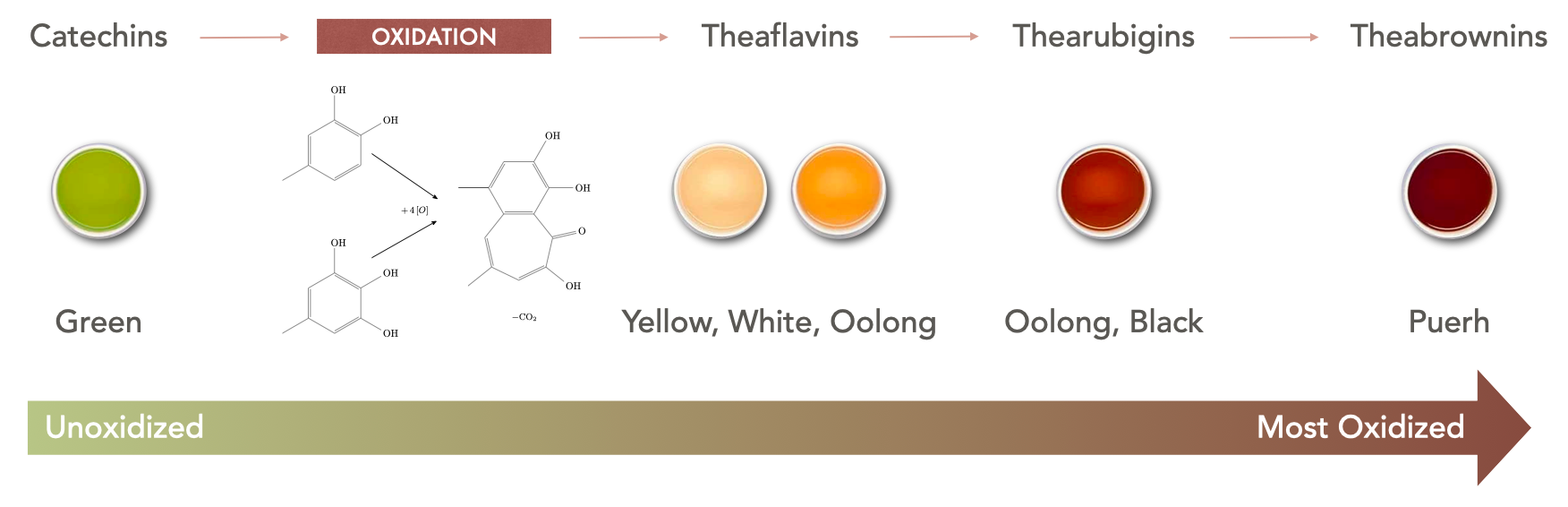
Looking at the tea types ordered by oxidation, green tea is totally unoxidized, containing only catechins. Green color looks out of place, but that’s just because the chlorophyll hasn’t oxidized, so it maintains its color. All other tea types are oxidized to increasing degrees, correlating with the color of the brew, going from white to dark. White tea has the most gentle processing applied to it, and oolong tea has a large range of oxidation, from 20% to 80%. Black tea is heavily oxidized, with dark tea (think pu-erh) having the biggest molecules, which absorb and scatter lots of light, creating a dark liquor.
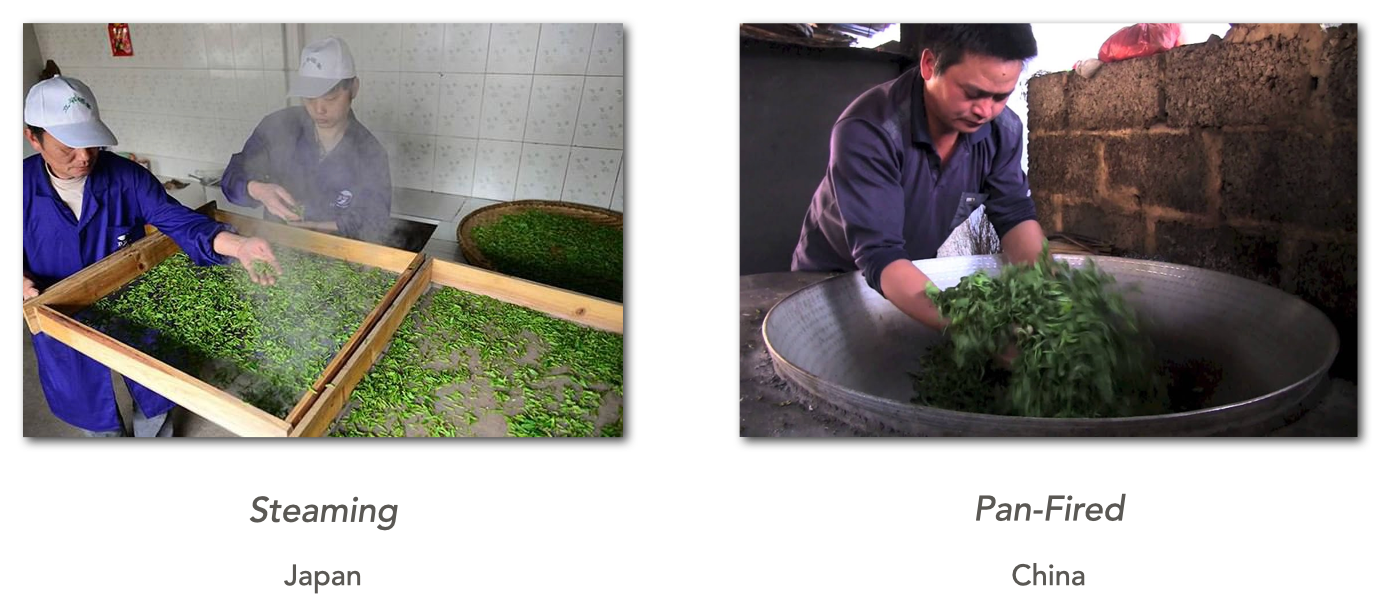
But how does one control how much oxidation occurs during processing? We must first recognize that oxidation is a chemical reaction, which consists of a substrate (catechin) and an enzyme (polyphenol oxidase) coming together to form a new compound. The first control mechanism we have is called fixing, which stops the reaction by denaturing the enzymes using heat. When the tea is fixed, it will no longer oxidize, so the catechins will be stuck in that state. Tea masters in Japan normally steam the fresh-picked leaves, imparting on the tea a grassy and floral aroma, whereas in China, tea masters normally pan fire the tea leaves, leaving a chestnut aroma behind. Though these methods vary from region to region, as kama-iri cha is a pan-fired green tea found in Japan.
The second control mechanism is time — reactions happen once a substrate and an enzyme reach an activation energy threshold. In a suitable environment (warm, sunlight, etc.) with enough time, the reaction will happen within the leaf at a spontaneous rate. This process is called withering, and it is the first step in processing white, oolong, and black teas, as it makes the leaf dehydrated and pliable. During this process, protease is also active, breaking down proteins into amino acids, which will become sweet and umami. Other active metabolic processes catalyzed by stressors like drought stress, heat stress, and pH stress play a large role in aroma formation.
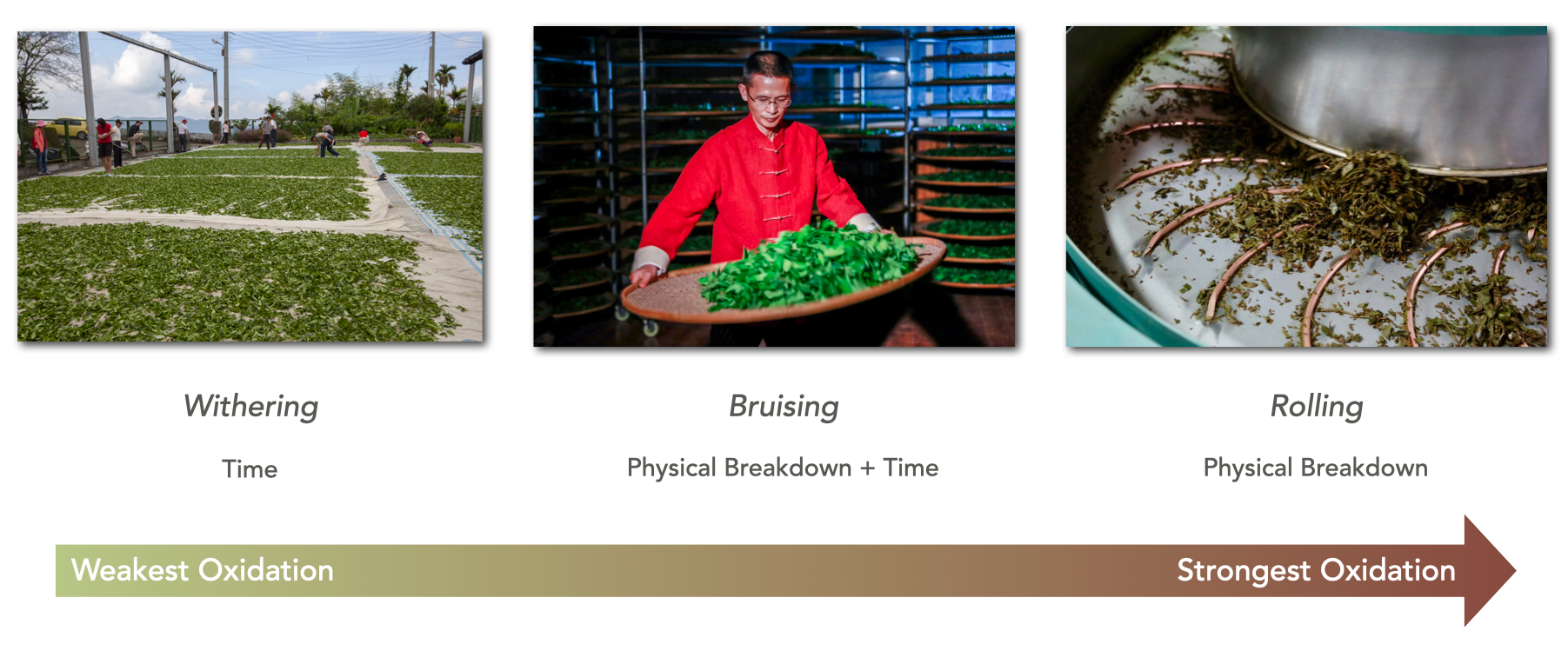
The third control mechanism is physical breakdown — we can physically bring the substrate and the enzyme together to force the reaction to occur. A less intense method people use for lighter oxidation is called bruising. A tea master, like the one in red in the photo above, will shake the leaves against each other, lightly bruising the tea leaves and letting the leaves rest, repeating this process until they reach their desired oxidation level (honed from years of experience). The more intense method is rolling, which is physically breaking the leaf down by rolling the leaves on top of each other, and this method is typically only used for black teas for oxidation, or for shaping the tea leaves after the tea has been fixed.
With these 3 control mechanisms, we can combine them in different ways to produce the 6 tea types.
And now introducing the six tea types
There are two categories of tea types: fixed teas and withered teas. The teas are first processed in their unique way, and then are rolled (w/exception of white tea) and dried in order to become shelf-stable.
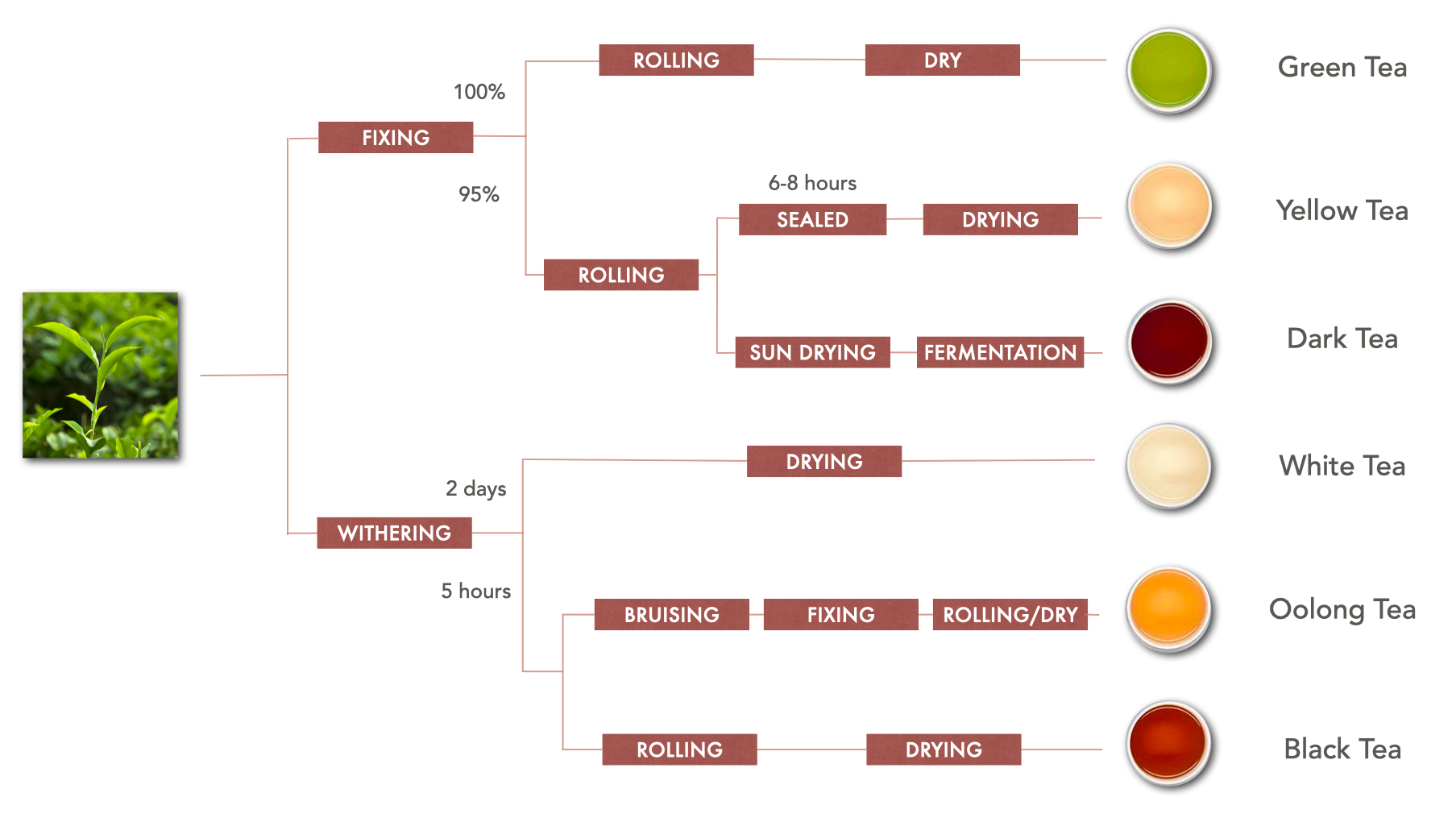
Fixed teas apply a fixing step first, stopping oxidation from proceeding. If the enzymes are all denatured, the tea will become green tea. However, yellow and dark tea apply a lighter fixing step, denaturing about 95% of the enzymes. The remaining 5% of the enzymes are active at a slower pace during the following fermentation period. If the tea leaves are placed into a warm and humid environment, not only will the enzymes continue to convert the catechins, but dense microbial communities will form and convert the catechins into novel compounds. Yellow tea results from a “sealing period”, where it is wrapped in paper or cloth for about 6-8 hours, before drying to finish.4
In contrast, dark tea, most notably Pu-erh, undergoes a significantly prolonged fermentation. This process begins with what’s referred to as maocha, the 95% fixed, rolled, and sun-dried tea leaf. Whether compressed into cakes or left loose, the tea, also known as raw Pu-erh, is subjected to fermentation over years in storage, leading to a gradual evolution of its color and flavor profile.5 To accelerate this transformation, maocha can undergo a “wet-piling” process — a pile of maocha is maintained at high moisture and temperature for several weeks.6 After the tea has significantly fermented, the tea is dried and results in what is known as ripe Pu-erh.
Withered teas all start with initiating the processing with withering, usually sitting outside in the sun. White tea uses withering as its main metabolic process, as it is withered outside for about 2 days, before being dried. Oolong and black tea employ a ~5-hour withering process in order to make the leaf more pliable, create aromas and sweet molecules. Following this withering process, oolong tea is bruised and withered to its desired oxidation, and then fixed in order to lock in that desired state. Black tea is continuously rolled until completely oxidized, before being dried.
With these six tea types, we can build a picture in our minds about the compositions of the six types of teas. For example, green tea will look very similar to the tea composition pie chart shown at the beginning of the article, and black and dark tea will have a large percentage of catechins converted to thearubigans and theabrownins. This composition gives us a clue on the optimal temperature and time to brew each of the six types of tea.
A mental model for tea brewing
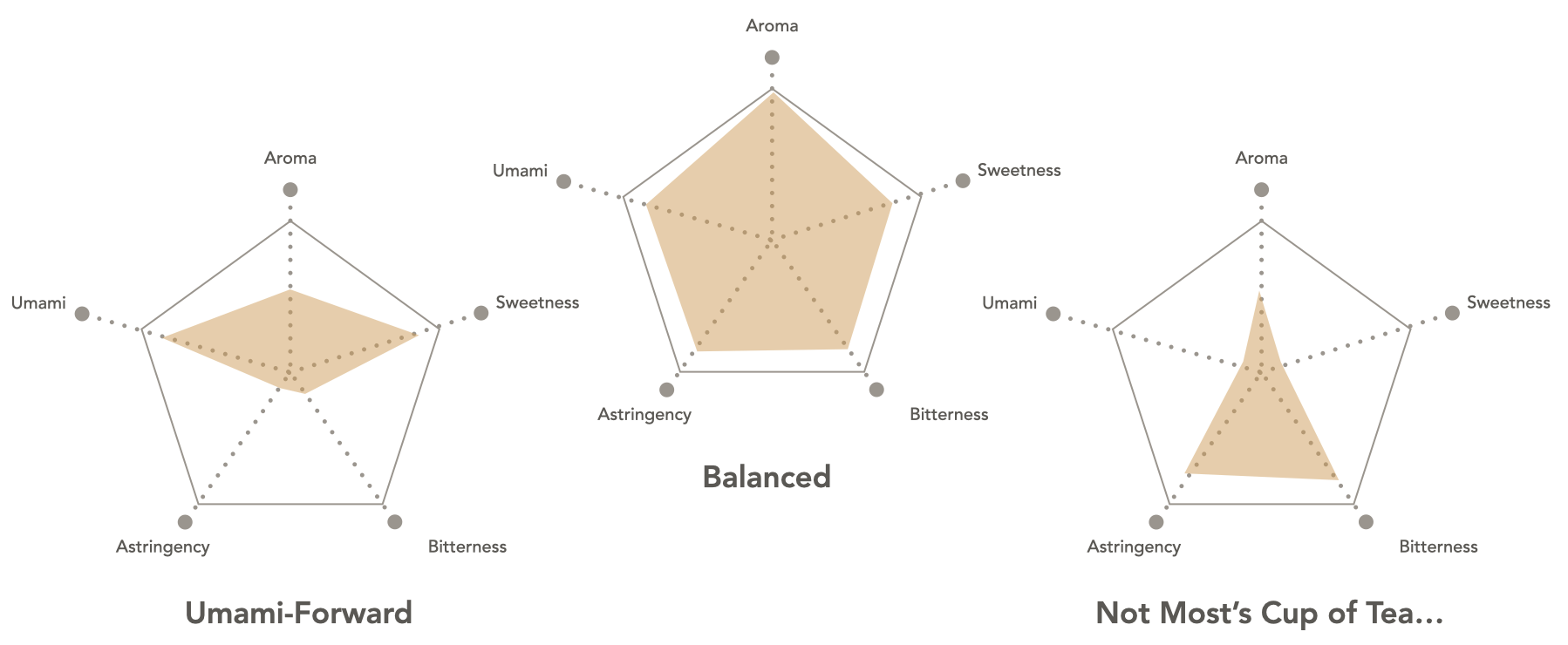
Tea brewing is full of mythology, which comes with being a treasured cultural pastime for many cultures before the scientific method. But the one thing we can agree on is that we want our tea to be pleasant, and with our newly acquired knowledge, we can create some guiding principles on how to brew each tea type. First, we have to define our goal posts. If we characterize our tea with these 5 attributes, sweetness, umami, aroma, bitterness, and astringency, we want our tea to be well-balanced, or it could be more forward in a positive quality, like umami. However, we deeply want to avoid making an astringent and bitter cup of tea.
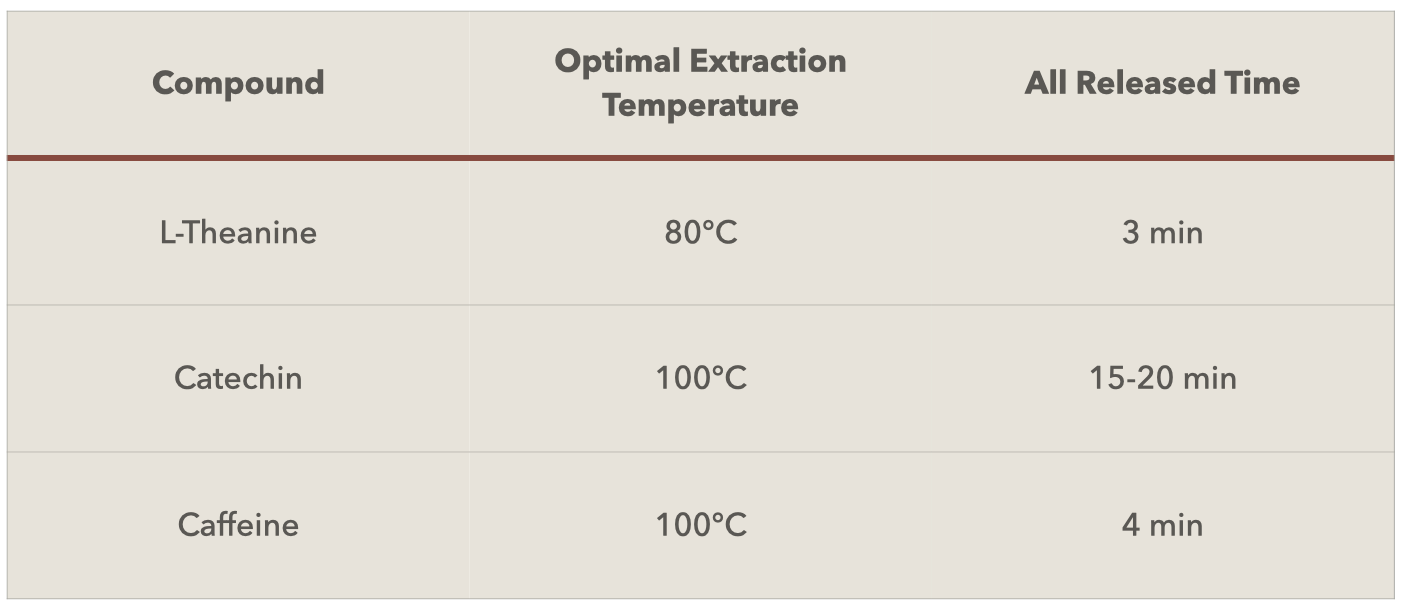
What are we doing when we brew tea? In chemistry terms, we can call this an extraction. Tea is a solution, where the solute is tea, and the solvent is water, and therefore, we want to extract the right tea compounds into water. There are three main compounds we care about with regard to taste. First is the tasty L-theanine (and other amino acids), which optimally extracts at 80°C, and as it only composes 3% of the dry tea weight, it will be all released in 3 minutes. Similarly, caffeine will release entirely in 4 minutes due to low concentration, but it is best extracted at a higher temperature, 100°C. Now, the compound we have to be careful about is the catechin, which extracts optimally at 100°C, but instead, this compound is released continuously for 15-20 minutes, and therefore is a long extraction. Just with this information, we can explain why we should remove a teabag from the mug after 4 minutes.
Now, the last piece of information we need to complete the puzzle is that as the catechin-derived molecules become larger, they are perceived to be less bitter. Therefore, catechins are the most bitter, followed by theaflavins, thearubigins, and lastly theabrownins, which are negatively correlated with bitterness.7
With our goal post in mind, we can infer that a low catechin to amino acid ratio (C/AA)8 will result in a tasty brew. Below, we order the teas from high to low on the dry tea C/AA ratio, which is the same as the oxidation gradient. Starting from green tea, which has the highest amount of catechins, as it was fixed quickly, to dark tea, where almost all its catechins were converted to theabrownins. For a tea with a higher C/AA ratio, we should brew cooler to extract less catechins, and then can raise the temperature of the tea as the ratio decreases.
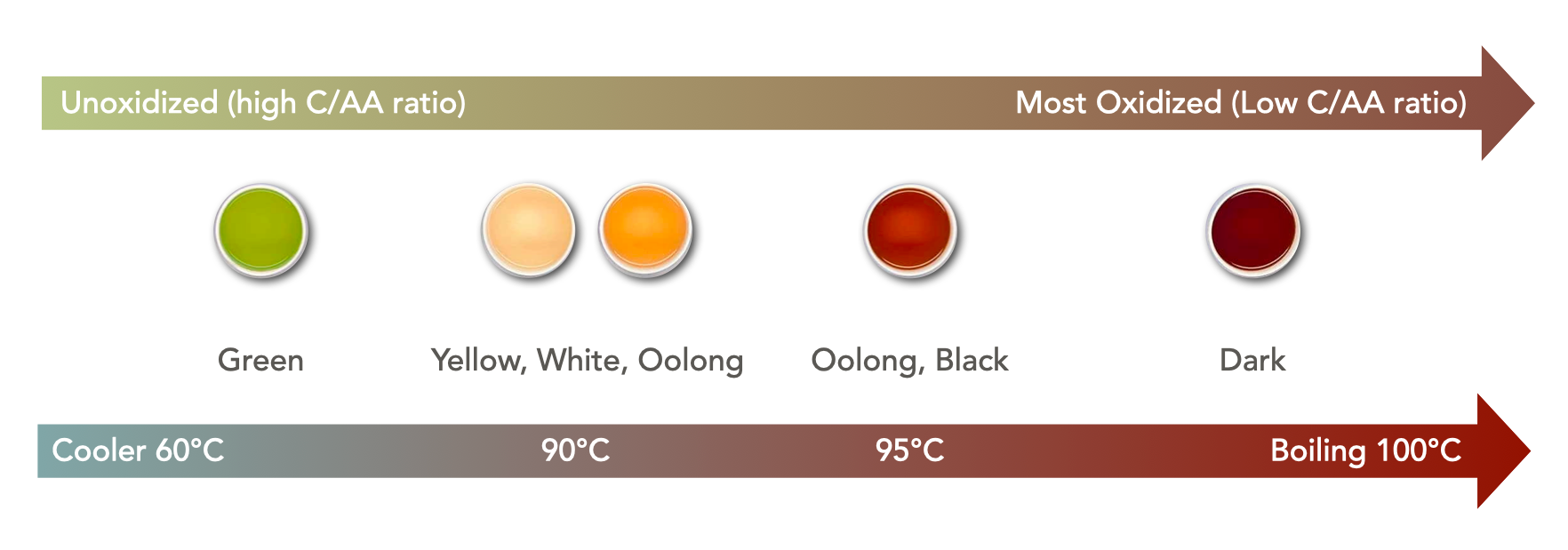
For instance, a lightly oxidized oolong tea could be relatively well brewed at 90°C water, as a lower temperature will naturally lower the C/AA of the resulting brew. On the other hand, pu-erh can be continuously boiled without any effect on its flavor profile, as it is mostly composed of very large and heavy, non-bitter theabrownins. But of course, one should brew what suits their taste, and only experimentation can tell you what the right temperature for the tea is.
Not surprisingly, Japanese culture has long known that green tea shouldn’t be brewed at boiling temperature,s as there are ceramics for the tea ceremony called the yuzamashi whose sole purpose is to cool down boiling tea to around 60°C. The other teas in between lie in a gradient between those two extremes.
The illusion of simplicity
Although we introduced the categorization of these six tea types, this exercise of reduction was to build a mental model of what tea is and deduce scientifically-based guidelines on how to brew your tea. The main takeaway is that the less oxidized the tea, the lower the temperature you want to brew at to maintain a well-balanced tea.
But simple stories hide more nuanced, interesting points in the details, and there are many interesting points to explore within tea that remain under-explored to the average tea consumer. A scientific lean on these topics includes differences between cultivars, different methods of rolling tea, and how they unfurl in the water, water quality for tea itself, L-theanine’s role in tea, etc. Or perhaps farming or cultivation topics, like old versus newly planted tea trees, or terroir in tea. But those are not at the expense of interesting cultural questions, like the history behind tea culture and ceramics in China and Japan. We’ll be hitting on those next in our tea series.
Much credit is deserved by Dylan from Wu Mountain Tea for creating great educational content that brought this to my attention. If you would like a masterclass on tea from a tea science researcher, watch this YouTube series.
Balentine et al. The chemistry of tea flavonoids, Critical reviews in food science and nutrition, 1997. https://pubmed.ncbi.nlm.nih.gov/9447270/
Abudureheman et al. Enzymatic Oxidation of Tea Catechins and Its Mechanism. Molecules, 2022. https://pmc.ncbi.nlm.nih.gov/articles/PMC8840101/pdf/molecules-27-00942.pdf
Xu et al. Yellow tea (Camellia sinensis L.), a promising Chinese tea: Processing, chemical constituents and health benefits. Food research international, 2018. https://pubmed.ncbi.nlm.nih.gov/29580521/
To see a picture of how raw pu-erh changes over the years, take a look at Figure 1 from this paper. Wang et al. Chemical constituents and biological properties of Pu-erh tea. Food Research International, 2022. https://pubmed.ncbi.nlm.nih.gov/35337597/
Lv et al. Processing and chemical constituents of Pu-erh tea: A review. Food Research International, 2013. https://www-sciencedirect-com.libproxy.berkeley.edu/science/article/pii/S0963996913001488
Wang et al. Comparison of Phenolic Compounds and Taste of Chinese Black Tea. Food Science and Technology Research, 2014. https://www.jstage.jst.go.jp/article/fstr/20/3/20_639/_html/-char/ja
Technically, tea literature uses the tea polyphenol to amino acid ratio (TP/AA), but theaflavins, thearubigins, and theabrownins are all classified as polyphenols, but do not have the same taste perception. Based on the data from the study I cited, I chose to describe this as catechin to amino acid ratio for the sake of simplicity in the blog post, but I think to be more accurate, it should be a sum of the polyphenol content weighted by bitterness/astringency.
Very informative! Gotta make one about coffee
Awesome I learned so much!! Looking forward to the series 🫡